
Year 2017 will be a benign year for FII flows into India feels Akash Singhania, deputy chief investment officer, DHFL Pramerica Asset Managers.

These refineries, commissioned mostly in the 1950s and 1960s during India's early industrialisation push, are inefficient and costly to maintain compared to their modern counterparts on the coast mainly operated by private companies.
A sluggish economy and stalled bureaucratic decision-making for the past two years thwarted capital investment and dented earnings, making it tough for the companies to raise funds.

Domestic markets are also aided by a rally in the global markets with US market surging to record high and a firming trend at other Asian bourses.

Modi made a strong case for a partnership between the producers and consumers in the oil market as it exists in other markets.

What stocks will gain from a normal monsoon?
.jpg)
Indian households put bulk of savings in bank deposits and insurance; the returns are minimal. If you're part of this, change.

A closer look at the data reveals that a lot of the items are not part of this calculation. The notable ones include buffalo meat, marine exports, raw cotton, and plantation crops such as tea, coffee, rubber, etc.

Aggressive rate hikes by the US Federal Reserve could result in a flight of capital from emerging markets like India, says B Gopkumar, chief executive officer, Reliance Securities.

Snapdeal delivers to the Dharavi centre, where buyers pick up their orders.

State Bank of India partnered GE Capital in 1998 for its credit card business.

To combat terror financing, India and the US committed to work together to check illicit money transfers.

'The finance minister and the government have met the immediate challenge. The wine this time is new and also in a new bottle, which, though not full, is less than half empty.'

Buffett had said in a CNBC interviewthat Yahoo's business had deteriorated significantly and that "something has to change there."

'Everyone is still trying to understand the quantum of impact demonetisation will have on the economy.'

An estimated $344 billion has been illegally removed from the Indian economy between 2002 and 2011

Global disinflation has finally caught up with India's high-cost economy.
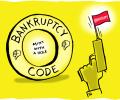
In a major relief to stressed assets, the Cabinet approved the proposed IBC amendment that the licences, permits, concessions, and clearances for a corporate debtor cannot be terminated or suspended or not renewed during the moratorium period. The Cabinet also allowed amending the code to streamline the corporate insolvency resolution process and protect last-mile funding to boost investment in financially distressed sectors.

'The fact that housing units worth a whopping Rs 4.5 lakh crore in top seven cities are stuck under various stages of non-completion indicates that there is a dire need to create stress-asset fund which will help bail out lakhs of distressed homebuyers,' says Anuj Puri, Chairman, Anarock Property Consultants, a real estate services company.

After having an eventful first day in India, Israeli Prime Minister Benjamin Netanyahu has begun his second day of his six-day visit. On Sunday, Prime Minister Narendra Modi broke protocol and received his 'friend' Netanyahu at the airport following which they made their way to Teen Murti Chowk, which was officially renamed Teen Murti Haifa Chowk. The day ended with a private dinner between the two world leaders. Here's what Netanyahu is up to on his second day.

The second-longest serving chairman introduced quite a few measures for the primary market and implemented a new corporate governance framework.

Harsh Roongta, Mahesh Padmanabhan, Anil Rego answer the most sought after questions on Budget Day.

RCap had proprietary investment book of Rs 2,000 crore (Rs 20 billion) as on end-March and owns stake in a host of companies.

Current account deficit is expected to narrow to 1 per cent.

Growth in the third quarter (October-December) is expected to be the weakest in years, with spending hit due to unavailability of enough replacement currency.

'A broad-based revival of private sector investment was likely in 2018-19 after businesses had successfully made the switch to the GST.'

If net forex outflows turn out to be relatively high in the next few years, the rupee could depreciate beyond Rs 80 to a dollar by 2022. The causal reasons could, for example, include unmet expectations of FPI and FDI investors about the performance of the Indian economy, sharp rise in prices of imported oil and decrease in FX remittances. The RBI has to ask itself whether guaranteeing future rupee-dollar exchange rates on FX forward contracts is a reasonable way to use its risk-bearing capacity, says Jaimini Bhagwati.

'When you forgive a farmer's loans there is this ideological economists lobby which says: 'That's socialism. And that's bad'.' 'But to forgive the loans of big people, so that they will be interested to invest further is capitalism and is good.'

Promoters, institutional investors have started increasing their holdings in domestic private sector companies.

Uber started its business three years ago in India and is now operating in over 20 cities with thousands of cab drivers.

"We are seeing the feel-good factor is back. It's only a matter of time before the entire economic engine starts working seamlessly," says Motilal Oswal.

Both the government and RBI have to complement each other if the economy has to revive quickly.

SBI's Bhattacharya is ranked second on the list, while ICICI's Kochhar is 5th and Axis's Sharma is 19th in the Fortune list

The broadening of the market rally sends the signal that growth will be broad-based, observes Akash Prakash.

India is affected by a 'resource inefficiency curse'.
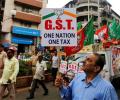
It is far from clear that this GST will have the silver bullet effect that the "pure" GST would have provided, says Mihir S Sharma.


Sachin Bansal, who had co-founded Flipkart with Binny Bansal in 2007, would exit the company

'Defence and aerospace show huge potential thanks to the government's Make in India push.'

'This confrontation could have been avoided by a less arrogant administration that initially listened, used whatever negotiating skills they had and tried to be more credible,' observes Ramesh Menon.
